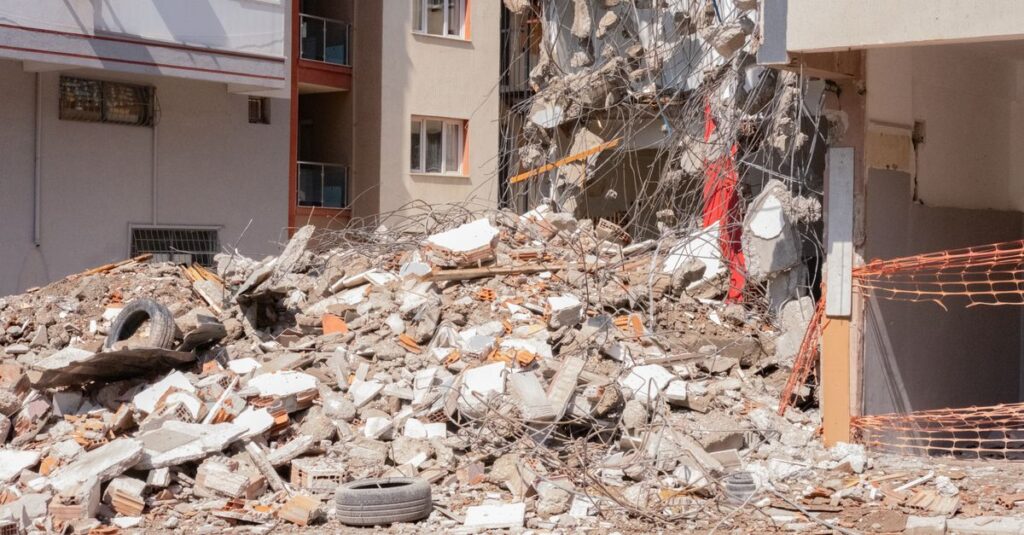
Renovation debris kills momentum. Drywall stacks up, lumber piles grow, and suddenly your crew is working around junk instead of working. Dumpster rentals sit half-empty for weeks while you pay by the day.
We offer Charleston contractors, flippers, and DIY renovators a faster option: call us, we show up, we load it, it’s gone the same day. No dumpster permits, no waiting, no surprise overage fees.
We haul away:
- Drywall and plaster
- Lumber and framing scraps
- Flooring (tile, hardwood, laminate, carpet)
- Roofing shingles and materials
- Cabinets and countertops
- Concrete and brick (small loads)
- General job-site junk
Contractor-friendly: Recurring pickup schedules, job-site invoicing, and crews that work around your subs. Many Charleston contractors use us instead of dumpsters for mid-size jobs.
What’s included in construction debris removal
This isn’t a “we’ll take a few bags” service — it’s job-site clearing at contractor speed. We haul the full range of renovation and build debris: drywall and plaster (including the dust-covered stacks that accumulate during a whole-house reno), dimensional lumber and framing offcuts, all flooring types (tile, hardwood, laminate, carpet and padding), roofing shingles and underlayment from re-roofs, old cabinets and countertops from kitchen gut jobs, and general job-site junk like packaging, pallets, and discarded fixtures.
Masonry gets a specific note: we take concrete and brick in small loads — think a patio demo or a chimney breast, not a foundation excavation. Extremely heavy materials load in limited quantities per trip for truck safety, so a full concrete driveway demo is a roll-off dumpster job. We’ll tell you which one you’re looking at when you call.
What we can’t take: wet paint, solvents, chemicals, and asbestos-containing materials. Dried-out paint cans are generally fine; anything liquid or chemical isn’t. If your demo uncovered suspect insulation or flooring that might contain asbestos, stop and get it tested — we won’t touch it until it’s cleared, and neither should your crew.
How it works: what to expect
Step 1 — Call or text photos. Call (843) 555-0100 and describe the debris, or text us photos of the pile. Contractors usually just say “kitchen gut, about half a dumpster” and we know exactly what that means.
Step 2 — We show up and load. Same-day service is standard across Charleston — call in the morning, work clean by afternoon. Our crew loads everything; your crew keeps working. We work around your subs, not through them.
Step 3 — Sorted and gone. Clean lumber, metal, and concrete go to recycling streams whenever possible. The rest is disposed of properly. You get an invoice that works with job costing — no dumpster rental period, no tonnage overage surprises.
Step 4 — Repeat as needed. Many of our contractor clients set up recurring pickups — every Friday, or at each project phase. One less thing to schedule.
Dumpster rental vs. junk removal: an honest comparison
Dumpsters make sense for huge, ongoing demo jobs where debris generates daily for weeks. For everything else, hauling usually wins: one upfront price for the debris that’s actually there, gone today — versus delivery fees, daily rental charges, potential street permits, driveway damage from a steel box, and tonnage overage fees. For loads under a full dumpster, hauling is usually cheaper and always faster.
What affects the price
Volume and weight. Volume is the primary factor — a bathroom gut versus a whole-house reno. Weight is the one that surprises people: the same truck volume in tile, concrete, or brick costs more to dump than drywall and lumber, and heavy materials may require multiple lighter loads.
Access and piling. Ground-floor demo with a clear path to the driveway loads fastest; debris coming down from a second story or a site with no driveway access takes more labor. Piling debris in one accessible spot before we arrive genuinely reduces the price.
How to prepare your job site
Pile the debris in one accessible location as close to truck access as possible — this saves more time than anything else. Sweep loose nails and screws from walkways, and separate out anything we can’t take: wet paint cans, solvents, chemicals, suspect materials. Clear the driveway or loading area so our truck can get close — every extra 50 feet of carry adds real time on a heavy load.
FAQ
Is junk removal cheaper than a dumpster rental?
For loads under a full dumpster, usually yes — and much faster. No rental period, no permit hassles, no driveway damage from a steel box.
How quickly can you clear a job site?
Same-day service is standard across Charleston. Call in the morning, work clean by afternoon.
Do you recycle construction materials?
Yes — clean lumber, metal, and concrete go to recycling streams whenever possible.
What can’t you take from a job site?
Wet paint, solvents, chemicals, fuels, and asbestos-containing materials. Dried-out paint cans are generally fine. If demo uncovered old insulation, vinyl flooring, or siding that might contain asbestos, get it tested before anyone — us included — handles it.
Do you offer recurring pickups for contractors?
Yes. Many Charleston contractors, flippers, and property managers set up recurring schedules — weekly, biweekly, or per project phase. Consistent crew, consistent pricing, job-site invoicing that fits your accounting.